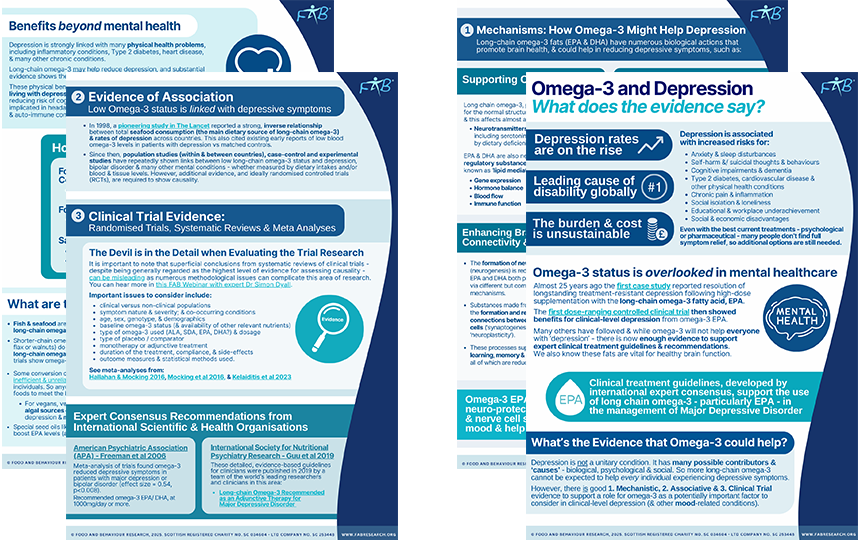
Omega-3 and Depression: What 25 Years of Research Tells Us

Depression is associated with increased risks for:


  • Anxiety and sleep disturbances
  • Self-harm and/or suicidal thoughts and behaviours
  • Cognitive impairments and dementia
  • Type 2 diabetes, cardiovascular disease and other physical health conditions
  • Chronic pain and inflammation
  • Social isolation and loneliness
  • Educational and workplace underachievement
  • Social and economic disadvantages


Even with the best current treatments - psychological 

or pharmaceutical - many people don’t find full symptom relief, so additional options are still needed.
Clinical treatment guidelines, developed by international expert consensus, support the use of long chain omega-3 - particularly EPA - in the management of Major Depressive Disorder

Omega-3 status is overlooked in mental healthcare


Almost 25 years ago the first case study reported resolution of longstanding treatment-resistant depression following high-dose supplementation with the long-chain omega-3 fatty acid, EPA.


The first dose-ranging controlled clinical trial then showed benefits for clinical-level depression from omega-3 EPA. 


Many others have followed and while omega-3 will not help everyone with ‘depression’ - there is now enough evidence to support expert clinical treatment guidelines and recommendations. We also know these fats are vital for healthy brain function.

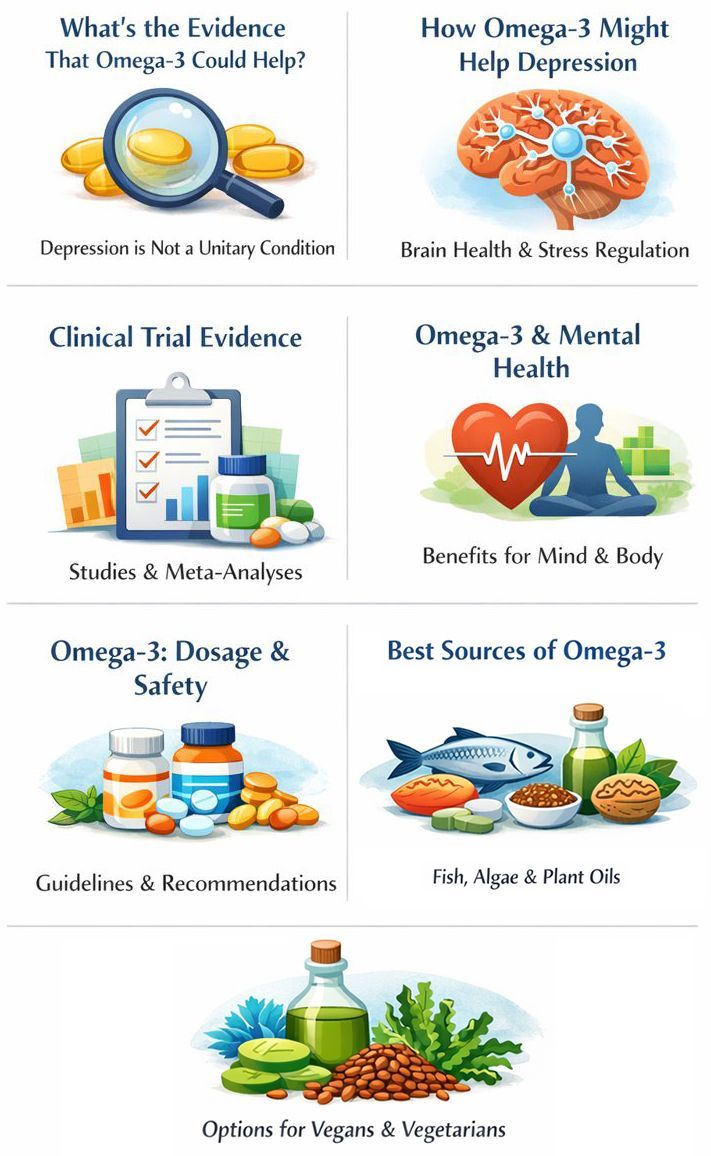
What’s the Evidence that Omega-3 could help?


Depression is not a unitary condition. It has many possible contributors and ‘causes’ - biological, psychological and social. So more long-chain omega-3 cannot be expected to help every individual experiencing depressive symptoms. 


However, there is good 1. Mechanistic, 2. Associative and 3. Clinical Trial evidence to support a role for omega-3 as a potentially important factor to consider in clinical-level depression (and other mood-related conditions).

Mechanisms: How Omega-3 Might Help Depression


Long-chain omega-3 fats (EPA and DHA) have numerous biological actions that promote brain health, and could help in reducing depressive symptoms, such as:


Supporting Cell Signalling


Long chain omega-3, particularly DHA, are vital for the normal structure of cell membranes, and this affects almost all cell signalling. 


  • Neurotransmitters implicated in depression, including serotonin and dopamine, are depleted by dietary deficiencies of omega-3 EPA/DHA


EPA and DHA are also needed to make numerous regulatory substances in the body and brain - known as ‘lipid mediators’ - that influence:


  • Gene expression
  • Hormone balance
  • Blood flow
  • Immune function


Calming Inflammation and Protecting Brain and Nerve Cells


Long-chain omega-3 can reduce inflammation via many different mechanisms - and studies indicate that increased omega-3 intakes may be particularly effective when depression is linked to inflammation:


  • Many of EPA’s derivatives have anti-inflammatory actions
  • Other substances made from both EPA and DHA actively help to resolve inflammation
  • Substances made from DHA help to protect brain cells from damage and death.


Enhancing Brain Cell Growth, Connectivity and Flexibility


  • The formation of new brain cells (neurogenesis) is reduced in depression. EPA and DHA both promote neurogenesis, via different but complementary mechanisms.
  • Substances made from DHA are vital to the formation and remodelling of connections between brain and nerve cells (‘synaptogenesis’ and ‘neuroplasticity’). 
  • These processes support learning, memory and mental flexibility - all of which are reduced in depression.


Modulating Stress and Improving Emotional Regulation


  • Depression involves dysregulation of the Hypothalamic-Pituitary-Adrenal (HPA) axis - involved in the classic ‘stress response’ - and this can compound difficulties with mood and emotional regulation.
  • Omega-3 EPA/DHA help modulate HPA axis overactivity, promoting resilience to stress, and improving emotional regulation in both animal and human studies.
  • These effects may underlie the benefits of omega-3 observed not only for depression but for other conditions or symptoms, including anxiety, aggression, bipolar, impulsivity and addictive behaviours among others.

Omega-3 EPA/DHA have anti-inflammatory, neuro-protective and other effects on brain and nerve cell signalling which may improve mood and help ease depressive symptoms.

Enjoying this article?

Get an expanded, downloadable version to your inbox when you sign up.

Evidence of Association

Low Omega-3 status is linked with depressive symptoms


In 1998, a pioneering study in The Lancet reported a strong, inverse relationship between total seafood consumption (the main dietary source of long-chain omega-3) and rates of depression across countries. This also cited existing early reports of low blood omega-3 levels in patients with depression vs matched controls.


Since then, population studies (within and between countries), case-control and experimental studies have repeatedly shown links between low long-chain omega-3 status and depression, bipolar disorder and many other mental conditions - whether measured by dietary intakes and/or blood and tissue levels. However, additional evidence, and ideally randomised controlled trials (RCTs), are required to show causality.


Clinical Trial Evidence:

Randomised Trials, Systematic Reviews and Meta Analyses

The Devil is in the Detail when Evaluating the Trial Research


It is important to note that superficial conclusions from systematic reviews of clinical trials - despite being generally regarded as the highest level of evidence for assessing causality - can be misleading as numerous methodological issues can complicate this area of research. You can hear more in this FAB Webinar with expert Dr Simon Dyall.

Important issues to consider include: 


  • clinical versus non-clinical populations 
  • symptom nature and severity; and co-occurring conditions
  • age, sex, genotype, and demographics
  • baseline omega-3 status (and availability of other relevant nutrients) 
  • type of omega-3 used (ALA, SDA, EPA, DHA?) and dosage
  • type of placebo / comparator
  • monotherapy or adjunctive treatment
  • duration of the treatment, compliance, and side-effects
  • outcome measures and statistical methods used.


See meta-analyses from:

Hallahan and Mocking 2016, Mocking et al 2016, and Kelaiditis et al 2023


Expert Consensus Recommendations from International Scientific and Health Organisations

American Psychiatric Association (APA) - Freeman et al 2006

Meta-analysis of trials found omega-3 reduced depressive symptoms in patients with major depression or bipolar disorder (effect size = 0.54, p<0.008).


Recommended omega-3 EPA/DHA, at 1000mg/day or more.


International Society for Nutritional Psychiatry Research - Guu et al 2019


These detailed, evidence-based guidelines for clinicians were published in 2019 by a team of the world’s leading researchers and clinicians in this area:


Were you expecting a paywall?


Food and Behaviour Research relies on donations to make articles like this one freely available.


Make a quick and easy donation of ANY AMOUNT and help support our Charity to create future articles and resources.


Looking for even more exclusive content?

Join us as a FAB Associate to access our audio-visual library and resources, and attend our live events for free.


All donations are very gratefully received

Thanks so much for your support


Contact Us

Contact Us

Benefits beyond mental health


Depression is strongly linked with many physical health problems, including inflammatory conditions, Type 2 diabetes, heart disease, and many other chronic conditions.


Long-chain omega-3 may help reduce depression, and substantial evidence shows they can also have many physical health benefits.

These physical benefits alone could improve quality of life for individuals living with depression, e.g. by improving cardiovascular health, or vision; reducing risk of cognitive decline; reducing chronic inflammation - implicated in headache and migraine, joint or back pain, allergies and auto-immune conditions, and many other illnesses.

How much Omega-3 is recommended and safe?


For Depression or other Mental Health Conditions (as an adjunctive treatment):

  • 1000-2000 mg/day EPA (and EPA > DHA)

 International Society for Nutritional Psychiatry Research, Guu et al 2019


For Cardiovascular Health of the general population:

  • at least 500 mg/day EPA+DHA

ISSFAL Statements 2004, 2009, UK JHCI 2005, 15 other international authorities 1989-2009


Safety of Omega-3 EPA/DHA

  • US FDA: 3000mg/day Generally Regarded As Safe (GRAS).
  • European Food Standards Agency: up to 5000 mg/day safe


What are the best sources?


  • Fish and seafood are the main dietary sources of long-chain omega-3, EPA and DHA
  • Shorter-chain omega-3 ALA from plant sources (like chia, flax or walnuts) do not have the same health benefits as long-chain omega-3 EPA and DHA. For depression, clinical trials show omega-3 EPA is the most important.
  • Some conversion of ALA into EPA and DHA is possible, but research suggests this is inefficient and unreliable in humans (especially for DHA) and differs further between individuals. So anyone not eating fish and seafood is likely to need supplements or fortified foods to meet the brain’s high need for long-chain omega-3.
  • For vegans, vegetarians or others seeking sustainable alternatives to fish oils, algal sources of long chain omega-3 are available (but if the aim is to support depression and mood symptoms, check these provide enough EPA).
  • Special seed oils like ahiflower offer another sustainable, evidence-based way to help boost EPA levels (as the omega-3 they provide, called SDA, converts better than ALA).


Disclaimer


As always – we emphasise that FAB's resources are provided for educational and informational use only, based on the current available evidence at the time of creation. This does not represent a substitute for personalised health care advice - and we encourage anyone with depression or any other mental health difficulties to seek advice from their GP and/or other registered Health Care Professional.


Share this article

Watch our recent FAB Live webinar and Q&A session on this topic
November 18, 2025
We’ve all heard that Omega-3 is 'good for the brain' - but what does the science really say when it comes to mental health and cognitive decline?

Read more on the importance of Omega-3
March 26, 2025
The Lifesaving Nutritional Program Based on the Diet of the Island of Crete
March 11, 2025
Preterm birth is associated with an increased risk for:  depression & other psychiatric disorders developmental conditions e.g. ADHD cognitive impairment breathing problems feeding difficulties cerebral palsy vision problems hearing problems Preterm birth is the leading cause of death in children under the age of 5 years globally. Preterm birth impacts babies, mothers & families internationally
July 1, 2024
Can long-chain omega-3 fatty acids EPA and DHA (from fish oils) help children with difficulties with mood, behaviour and/or attention?