Balancing Human & Planetary Health: Calling UK Dietitians & Registered Nutritionists
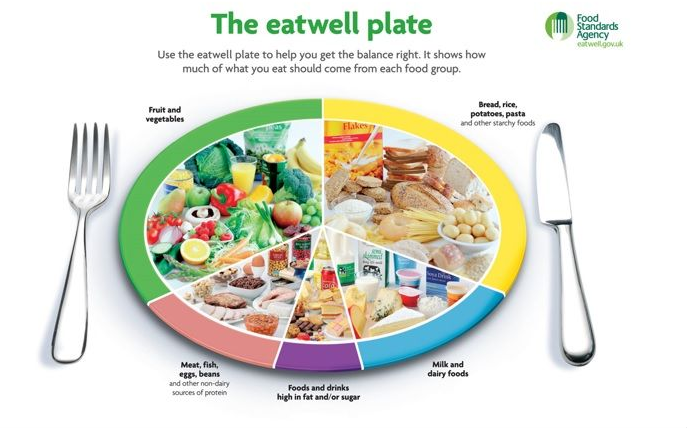
Share your expertise and insights in a 15 minute Survey on Integrating Sustainability Into Future Updates of The Eatwell Guide
This survey is for registered dietitians and registered nutritionists (RNutr and ANutr) practicing in the UK and for students on accredited UK courses.
Your expertise and insights are important and will help to inform recommendations to the UK government and policy makers for updating the Eatwell Guide to incorporate recommendations for improving both human and planetary health outcomes.
Take part and share
University of Winchester, the nutrition education hub MyNutriWeb, and Plant-Based Health Professionals UK (PBHP UK) are leading this research, with plans to publish it in a peer-reviewed journal. FAB is not affiliated with these organisations but as a charity we feel it is an increasingly important theme to discuss, and the importance of acknowledging the contributions from evidence-based nutrition professionals.
Are you?
- an NHS employee
- a UK university staff member or student
And are you interested in
- how the NHS could improve its support for both patients and staff by taking more account of the importance of nutrition and diet for mental (as well as physical) health and wellbeing?
If so, then please sign up for FREE Updates and News on FAB's work with the NHS here.

FAB Revisits Veganuary & Plant-Based Eating
As Veganuary has rolled around at the start of this New Year, we have been reflecting again on the importance of acknowledging the need for well-planned plant-based diets to protect against the risks of essential brain-nutrient deficiencies (like B12, DHA, iodine, choline, iron, zinc and more) - a key area for FAB Research.
The benefits of additional fibre and incorporation of a wide range of colourful plant-based foods are well documented to bring about benefits for general and gut health, but often the brain, and its own unique nutritional requirements, are missed from the conversation.
Enjoying this article?
Get an expanded, downloadable version to your inbox when you sign up.
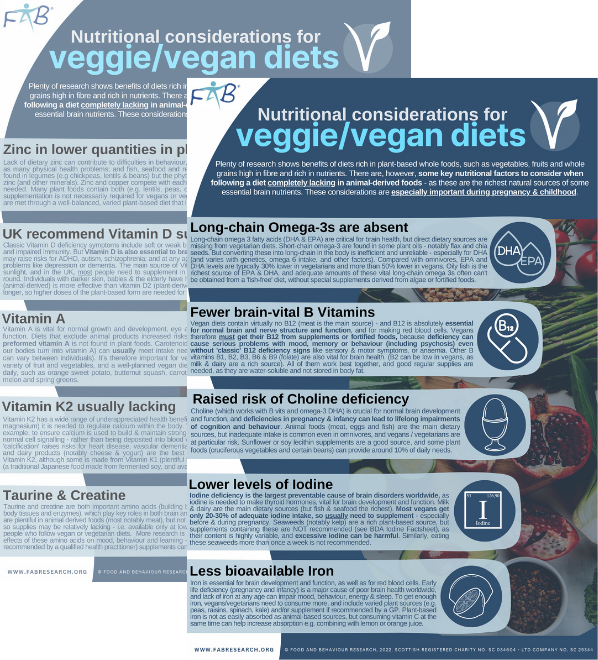
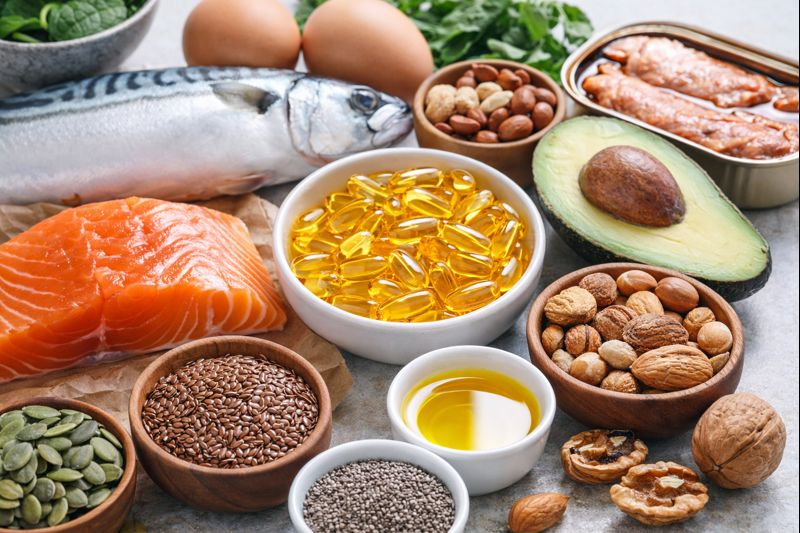
Animal-based foods, such as fish, are in fact the richest sources of a wide range of brain-essential nutrients.
If these are not accounted for in plant-based diets (e.g. use of fortified options and supplementation) this can unfortunately have unintended negative consequences for mental health and brain function, even with the best intentions.
This is particularly true for groups with additional risk factors and vulnerabilities, such as individuals experiencing food insecurity, or during pregnancy and early life development.
Want to learn more?
If this area interests you, do check out some of our articles & resources below on brain-essential nutrients, sustainability and more.
- Featured Article: Rethinking Omega-3s for Health and Sustainability
- The Fats of Life & Solutions from the Sea: A Tribute to Prof Crawford
- Featured Article: Your Brain on Plants
- Iodine in Pregnancy and Children's Brains
- Building a Baby's Brain - The First 1,000 Days
- Omega-3 in Pregnancy for Brain Health & Preterm Birth
- Professor warns of micronutrient deficiency risks in sustainable diets
- 'Blue food revolution' to tackle climate change and malnutrition
Were you expecting a paywall?
Food and Behaviour Research relies on donations to make articles like this one freely available.
Make a quick and easy donation of ANY AMOUNT and help support our Charity to create future articles and resources.
Looking for even more exclusive content?
Join us as a FAB Associate to access our audio-visual library and resources, and attend our live events for free.
All donations are very gratefully received
Thanks so much for your support
Contact Us
Contact Us
Watch our FAB webinar and Q&A session on this topic
● Rise of veganism: Marketing of Veganuary and its impact on dietary trends.
● Motivations for veganism: Ethical, environmental, and health considerations.
● Health implications: Comparing plant-based and ultra-processed diets.
● Evaluating dietary changes: Principles to assess the safety and effectiveness of dietary interventions.
Share this article
More articles from FAB Research